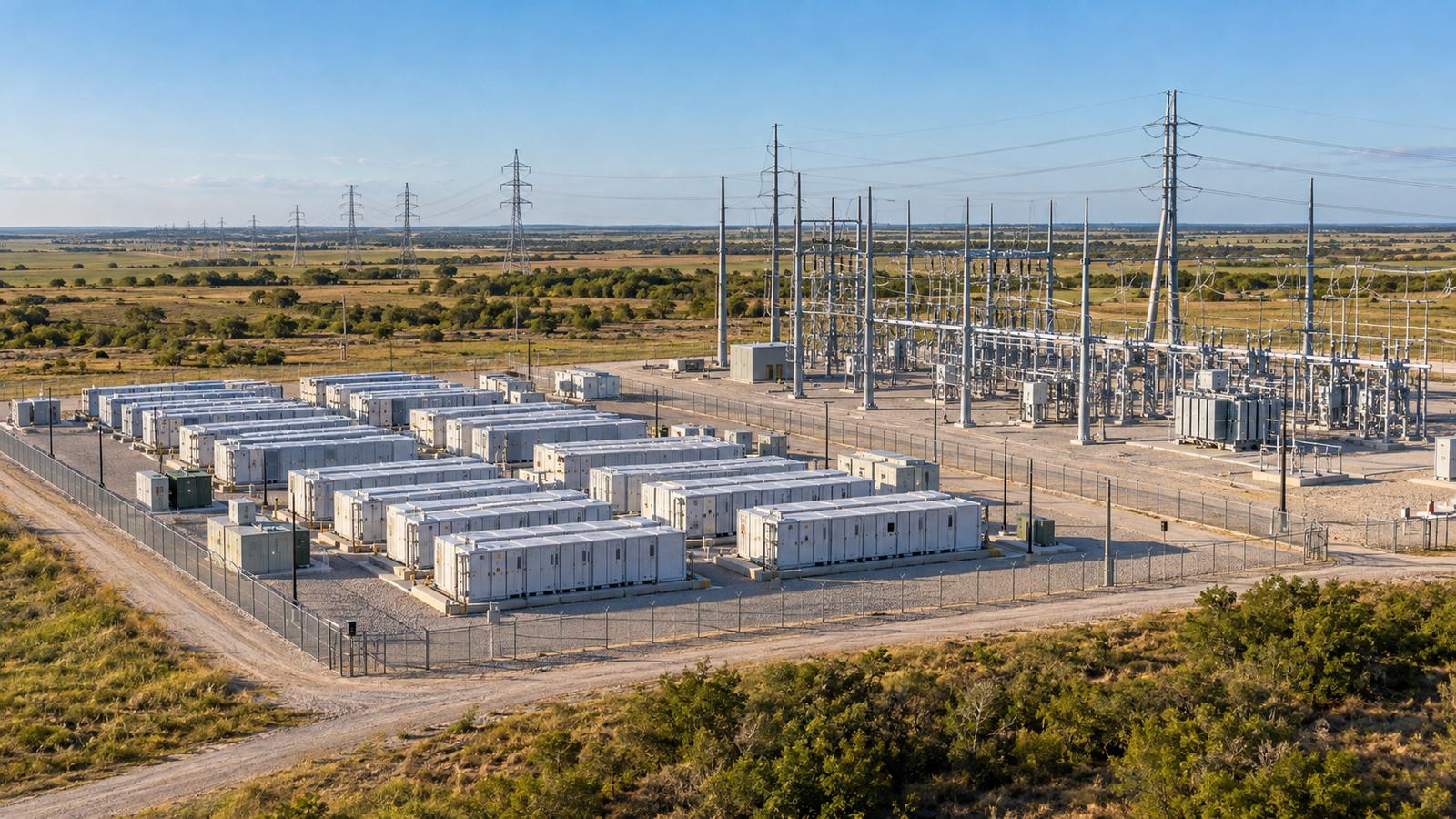
A developer shows up, talks about a solar farm or a battery project, and then asks for years. Years of option payments before anything gets built. The first reaction most landowners have is fair: why does this take so long?
The short answer is the grid. In Texas, almost every large solar or storage project has to earn its place on the ERCOT transmission system before it can be financed or built, and that process takes time. Understanding how it works is the best protection you have when you negotiate a lease, because it tells you which timelines are normal and which ones mean a developer is simply holding your land.
The short answer: plan in years, not months
Across the United States, the median project completed in 2025 took more than five years to go from its first interconnection request to commercial operation, according to Lawrence Berkeley National Laboratory’s Queued Up: 2026 Edition. ERCOT has historically moved faster than most regions, but a realistic Texas timeline from signed option to an operating project is still several years. Most of that time is spent on studies and agreements, not construction.
Just as important: most projects that enter a queue never get built. The same Berkeley Lab research found that only about 13 percent of the capacity that requested interconnection from 2000 through 2020 had reached operation by the end of 2025, and roughly 75 percent had withdrawn. A lease with a weak developer is not a lease that pays. It is an option that expires.
How big is the line?
As of February 28, 2026, ERCOT reported 2,008 active generation interconnection requests totaling about 453,600 megawatts, including roughly 177,600 megawatts of battery storage and 162,900 megawatts of solar. For perspective, that is several times more capacity than Texas uses on its hottest day. ERCOT’s April 2026 update showed about 262,000 megawatts sitting at the full-study approval stage alone, which is where the heaviest engineering work happens.
That backlog is why grid position is the single biggest driver of what land is worth to a developer. A parcel near a substation or high-voltage line with room to connect can move through the process. A parcel that needs miles of new line or major upgrades often cannot, no matter how flat and open it is.
The ERCOT process, stage by stage
Every project and every transmission provider is a little different, but the path generally looks like this.
- Screening and site control. The developer screens your land against transmission, terrain, floodplain, and environmental constraints, then signs an option so it can spend money studying the site. This is where your option payments begin.
- Interconnection request. The developer submits a generation interconnection request (known as a GINR) to ERCOT with a fee and technical details for the project.
- Screening study. ERCOT runs an initial study to see how the project interacts with the grid and flag obvious problems.
- Full interconnection study. The transmission service provider that owns the nearby lines runs the detailed engineering - power flow, short circuit, facility, and stability analysis - and identifies what has to be built to connect the project. This is usually the longest stage.
- Interconnection agreement. The developer and the transmission provider sign an agreement that sets the connection point, the facilities to be built, and the schedule. For most projects, this is the point where development risk drops sharply.
- Financing, construction, and commissioning. The project owner finalizes financing and equipment, builds the project, and completes ERCOT’s registration and energization steps. Construction itself often takes one to two years.
Has a developer already approached you?
Run your property through our landowner form for a no-obligation read on grid access, buildable area, and fit - before you sign anything.
Check My LandWhy your project will probably change hands
Many projects are developed by one company and built and owned by another. Independent developers - Aurevia among them - specialize in the front end: finding the land, earning site control, and advancing the interconnection position. Once a project clears the key interconnection milestones, it is often sold to an independent power producer, utility, or long-term owner that builds and operates it for decades.
That handoff is normal, and it should not change anything for you. A well-written lease requires any new owner to assume every obligation in writing - payments, escalators, decommissioning security, and restoration - so the terms travel with the land. What you should watch for is a developer that plans to sell your lease before it has done any real work, which is how land gets tied up without a project behind it.
What the timeline means for your lease
Once you understand the process, a few lease terms matter more than the headline rate.
- Option length and extensions. A few years of initial option, with defined extensions, is normal for the timeline above. Unlimited extensions for token payments are not.
- Payments that rise with time. Extension payments should step up. Your land is off the market for every year the developer holds it.
- A clear trigger to convert. The lease should say what converts the option into the operating lease and when construction-phase and operating payments start.
- Assignment protections. Any buyer of the project assumes every obligation, in writing, with notice to you.
- Your own counsel. Have an attorney experienced in energy leases review the document before you sign.
Questions to ask any developer
You do not need to be an engineer to test whether a developer is serious. Ask where the project will connect and at what voltage. Ask whether an interconnection request has been filed and what stage it is in - ERCOT publishes a monthly Generator Interconnection Status report that lists active requests by county, so progress can be checked. Ask what happens to your option payments if the studies come back with expensive upgrades. A credible developer answers plainly and puts the important commitments in writing.
For more on the terms themselves, see our guide to what to look for before signing a renewable energy land lease, and our guides to Texas solar lease rates and battery storage leases.
The grid sets the pace. A good lease makes sure the waiting is paid for and the promises survive every change of ownership.
This article is general information for Texas landowners and is not a lease offer, legal advice, or tax advice. Interconnection timelines vary by project, location, and transmission provider. Figures cited are from ERCOT reports dated February through April 2026 and Lawrence Berkeley National Laboratory’s Queued Up: 2026 Edition. Consult your own attorney and tax advisor before entering any agreement.